

How to Plan a Jaisalmer Trip on a Budget (Under ₹10,000)
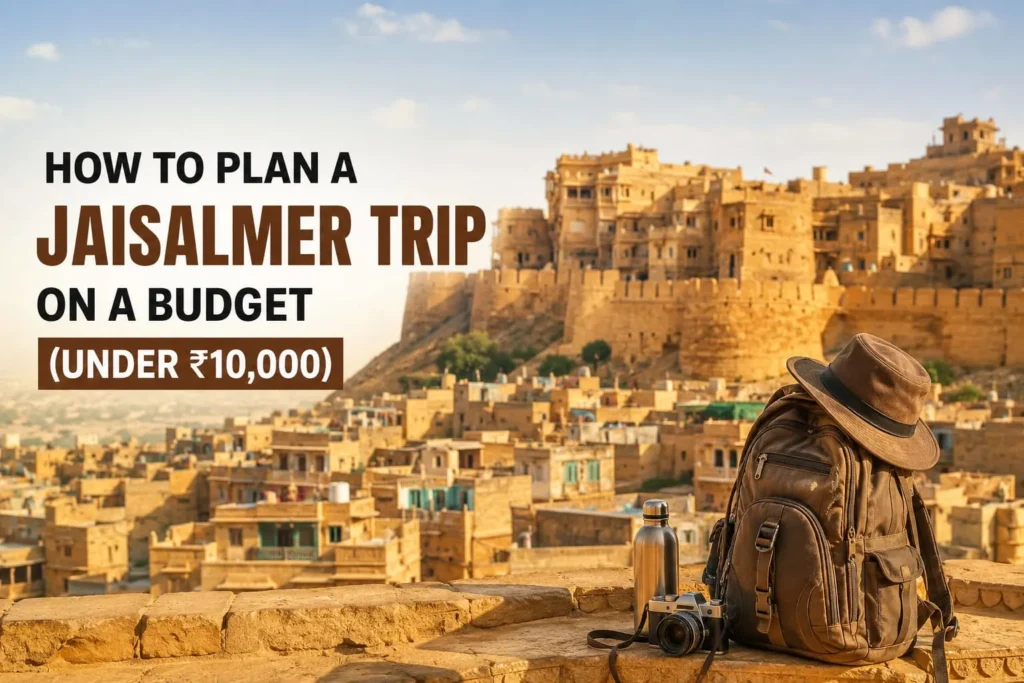
If someone tells you Jaisalmer is an expensive destination, they haven’t actually tried booking it themselves. I get why the assumption exists — golden forts, desert camps, camel safaris under the stars, it all sounds like something out of a luxury travel brochure. But the truth is, Jaisalmer is one of the most backpacker-friendly cities in Rajasthan, and with a bit of planning, you can cover the entire trip — travel, stay, food, and sightseeing — comfortably within ₹10,000 per person.
This guide breaks down exactly how, with real numbers, a day-by-day plan, and a few tricks that locals and frequent travellers swear by.
Why Jaisalmer Works So Well for a Budget Trip
Unlike Udaipur or Jaipur, where hotel and food prices climb quickly once you’re near the main attractions, Jaisalmer still has a strong old-school backpacker culture. Dorm beds inside and around the Fort area start as low as ₹300–₹500 a night. Thalis at local dhabas rarely cross ₹150, and because most of the city’s charm — the narrow lanes, the havelis, the lake — can be explored on foot, you’re not constantly paying for transport either.
The other advantage is timing. Jaisalmer’s low season (April to June, and again briefly in the monsoon months) sees hotel and camp rates drop by 30–50%. If you can handle the desert heat, this is genuinely the cheapest time to visit.
Jaisalmer on a Budget: A Step-by-Step Cost Guide
Step 1: Getting There Without Overspending
Flights into Jaisalmer Airport exist, but they’re rarely the budget option — expect to pay anywhere from ₹5,000 upward one-way, which alone would eat your entire trip budget.
The smarter route is by train. Jaisalmer is directly connected to Delhi, Jodhpur, and Jaipur by rail, and a sleeper-class ticket on an overnight train typically costs somewhere between ₹300 and ₹600 depending on distance. Booking 60–90 days in advance almost always gets you a confirmed berth at the lowest fare. If you’re coming from Jodhpur specifically, the train ride is short (5–6 hours) and can cost as little as ₹150–₹200. Buses are the other reliable option. State-run RSRTC buses from Jodhpur to Jaisalmer run around ₹300, and private overnight Volvo buses from Jaipur cost somewhere between ₹500 and ₹1,200. A neat trick here: booking an overnight train or bus means you save on a night’s accommodation, since you sleep during transit and arrive fresh the next morning.
Suggested transport budget: ₹600–₹1,200 (round trip, sleeper class or bus)
Also Read About: Jaisalmer Trip from Delhi: Train, Flight or Road – Which is Best?
Step 2: Where to Stay Without Burning Your Budget
This is where most people overpay without realising it. Jaisalmer has a genuinely good hostel and budget-guesthouse scene, especially clustered around the Fort and Gandhi Chowk areas.
- Dorm beds: ₹300–₹500 per night, usually with free Wi-Fi, lockers, and rooftop seating that looks straight at the Fort.
- Budget guesthouses/homestays: ₹800–₹1,200 per night for a private room, sometimes with home-cooked meals available for an extra ₹150 or so.
- Desert camp stays (Sam Sand Dunes): ₹800–₹1,500 per person, and this usually already includes dinner, breakfast, a short camel ride, and a bonfire with folk music in desert camps.
A smart way to stretch your budget further is booking hotels directly through Book Jaisalmer instead of a third-party aggregator, since cutting out the middleman this way can save you 20–30%.
Suggested stay budget for 2 nights: ₹1,200–₹2,500
Step 3: Eating Well Without Overspending
Jaisalmer’s food scene is one of its underrated strengths for budget travellers. Skip the rooftop cafés with fort views (they’re lovely, but priced for tourists) at least for a couple of meals, and eat where the locals eat instead.
- A full thali at a local dhaba: ₹100–₹180
- Rajasthani street snacks like kachori, mirchi bada, and pyaaz kachori: ₹20–₹50 a plate
- Dal Baati Churma, the dish you really shouldn’t skip: ₹150–₹250 depending on where you eat
Stick to busy stalls where you see locals eating — it’s a good sign for both hygiene and value. Carrying some cash also helps, since many small dhabas and auto drivers in Jaisalmer still don’t accept UPI.
Suggested food budget for 3 days: ₹1,000–₹1,500
Step 4: Getting Around the City
Jaisalmer is compact enough that a lot of it is walkable, especially once you’re inside the Fort. For everything else:
- Shared autos: as low as ₹20 per ride
- Private auto-rickshaws: ₹50–₹150 depending on distance
- Cycle or scooter rental: ₹300–₹500 a day, useful if you want to explore Gadisar Lake and the havelis at your own pace
Suggested local transport budget: ₹300–₹500
Step 5: Sightseeing and Activities
Here’s the good news — a lot of what makes Jaisalmer special doesn’t cost much at all.
- Jaisalmer Fort (Sonar Quila): Walking through the fort’s lanes is free. There’s a nominal charge only if you want to enter certain palace sections or museums — around ₹50 for Indian visitors.
- Patwon Ki Haveli, Nathmal Ki Haveli, Salim Singh Ki Haveli: Combo tickets for multiple havelis are usually available for around ₹100, letting you see some of the finest sandstone carving in Rajasthan.
- Gadisar Lake: Free to walk around, and one of the best spots for a quiet evening.
- Camel Safari at Sam Sand Dunes: This is the one splurge worth keeping. A shared group safari brings the cost down significantly — expect to pay ₹800–₹1,000 per person, which usually covers the camel ride, sunset viewing, and a simple dinner on dunes.
Suggested sightseeing and activities budget: ₹1,000–₹1,300
Sample Budget Breakdown (2 Nights / 3 Days, Per Person)
Category | Estimated Cost |
Train/bus (round trip) | ₹600 – ₹1,200 |
Accommodation (2 nights) | ₹1,200 – ₹2,500 |
Food (3 days) | ₹1,000 – ₹1,500 |
Local transport | ₹300 – ₹500 |
Sightseeing + camel safari | ₹1,000 – ₹1,300 |
Miscellaneous/shopping buffer | ₹800 – ₹1,000 |
Total | ₹4,900 – ₹8,000 |
Even on the higher end of these numbers, you’re comfortably under ₹10,000 — and that’s without cutting corners on the experiences that actually matter, like the camel safari and a night at the dunes.
A Simple 3-Day Budget Itinerary
Day 1
Arrive by overnight train, check into your hostel or guesthouse near the Fort. Spend the morning exploring the Fort’s lanes and havelis on foot. Evening at Gadisar Lake, followed by a thali dinner at a local dhaba.
Day 2
Morning at Patwon Ki Haveli and the nearby markets for a bit of bargained shopping. Head out to Sam Sand Dunes by afternoon for the camel safari, sunset, and an overnight desert camp stay with dinner and a cultural program included.
Day 3
Return to the city by morning, grab breakfast, pick up any last souvenirs, and catch your return train or bus.
Money-Saving Tips That Actually Work
- Travel in a small group. Camel safaris and jeep rides get significantly cheaper per person when shared.
- Avoid peak season if you can. October to February is when Jaisalmer is busiest and priciest. Shoulder months like March and September offer a good balance of weather and lower rates.
- Book directly with local operators for camps and safaris instead of going through big travel platforms — you’ll usually save 20–30%.
- Confirm prices in writing before you commit to a camel safari or camp package. A quick photo of the quoted price board avoids confusion later.
- Carry cash. Not every dhaba, auto driver, or small shop accepts digital payments.
- Use offline maps. Network connectivity can be patchy once you’re near the dunes.
Book Your Stay and Activities Through Book Jaisalmer
Planning everything yourself is great for keeping costs down, but if you’d rather skip the back-and-forth of comparing hostels and haggling with camp operators, Book Jaisalmer handles the whole thing in one place — stays, safaris, and local transport included.
For accommodation
You can choose between budget-friendly hotels inside the city or a desert camp right at Sam Sand Dunes, depending on whether you want convenience or that under-the-stars experience.
For activities
The camel safari and jeep safari dune-bashing packages are bookable directly, along with add-ons like the cultural dinner program on the dunes if you want music and a bonfire with your sunset.
For getting around
If you’d rather not deal with shared autos and negotiating fares, a sedan or tempo traveller can be booked for airport transfers and sightseeing.
Booking through one platform also means fewer surprises — no re-negotiating prices at the dunes or wondering if your homestay actually has the amenities it claimed.
Conclusion
Jaisalmer has a way of feeling far more luxurious than it actually costs — golden sandstone lanes at sunset, a camel safari into the dunes, a bonfire under a genuinely dark sky. None of that requires a big budget. It requires a bit of planning, a willingness to eat where locals eat, and a preference for shared experiences over solo splurges. Get those three things right, and ₹10,000 will take you further in Jaisalmer than it would almost anywhere else in Rajasthan.
You Can Also Read More About: Top 10 Places to Visit in Jaisalmer
FAQ’s
1. Is Jaisalmer expensive for a budget traveller?
No, with hostel stays, local dhabas, and shared safaris, a well-planned Jaisalmer trip can comfortably stay under ₹10,000 per person for 2–3 days.
2. What is the cheapest way to reach Jaisalmer?
Sleeper-class train tickets from Delhi, Jodhpur, or Jaipur are the most economical way in, typically costing between ₹150 and ₹600 depending on the route.
3. How many days are enough for a Jaisalmer trip?
Two to three days is enough to cover the Fort, the havelis, Gadisar Lake, and an overnight desert camp experience at Sam Sand Dunes.
4. Is a desert safari worth including in a tight budget?
Yes — it’s the one experience most people travel to Jaisalmer for. Shared camel safaris keep the per-person cost around ₹800–₹1,000, including the camp stay and dinner.
5. What is the best time to visit Jaisalmer on a budget?
March, April, and September offer noticeably lower hotel and camp rates compared to the October–February peak season, while still being manageable weather-wise.