

Patwon Ki Haveli Guide: History, Architecture, Timings & Entry Fee
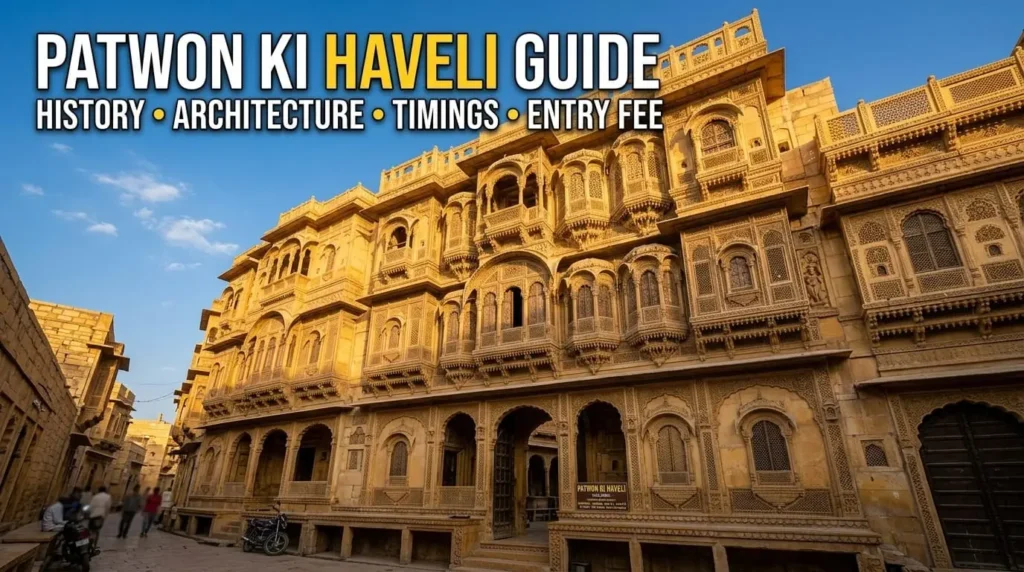
Patwon Ki Haveli is a cluster of five interconnected mansions in Jaisalmer, built between 1805 and the mid-1800s by the wealthy Patwa merchant family, and it’s widely considered the largest and most elaborate haveli complex in Rajasthan. Located about 500 metres from Jaisalmer Fort, it’s open daily, with an entry fee and typically charges extra for cameras. Here’s everything worth knowing before you visit — the history behind it, what makes the architecture so distinctive, and the practical details for planning your trip.
Patwon Ki Haveli History and Why It’s So Famous
1. Built by a wealthy merchant family
Commissioned by Guman Chand Patwa, a prosperous Jain trader whose fortune came from the gold, silver, and brocade trade, connecting Jaisalmer to markets across India in the era before rail and highways.
2. This trade is where its nickname comes from
Patwon Ki Haveli is also known as the “Mansion of the Brocade Merchants,” a direct nod to the family’s business.
3. Construction began in 1805
Rather than one grand family home, Guman Chand Patwa built five separate but connected sections, one for each of his five sons.
4. It took roughly fifty years to complete
Each section was built out in turn, meaning the family who commissioned it likely didn’t live to see the full complex finished.
5. The scale is what sets it apart
Five related but distinct architectural statements standing shoulder to shoulder, a rare scale for a private residence of that era.
6. It’s often cited as the first haveli built in Jaisalmer
Predating many of the city’s other well-known merchant mansions, adding historical significance beyond just its size.
7. Ownership has shifted over generations
Parts of the complex are now managed by the state government and the Archaeological Survey of India, with sections used for local art and craft offices, while other portions remain open to visitors. One section is still privately held.
In short: Patwon Ki Haveli is famous because it represents the peak of what a wealthy Jaisalmer merchant family could build in the 19th century — five havelis’ worth of ambition, wealth, and craftsmanship, all standing together as one address.
Patwon Ki Haveli Architecture: A Beautiful Blend of Art and Heritage
The Patwon Ki Haveli Architecture is one of the biggest reasons this heritage mansion attracts thousands of visitors every year. Built with golden-yellow sandstone, the haveli represents the exceptional craftsmanship of Jaisalmer’s local artisans and showcases the detailed artistic work that was popular during the 19th century.
Some of the most remarkable architectural features of Patwon Ki Haveli include:
Intricate Sandstone Carvings
The most eye-catching feature of Patwon Ki Haveli is its detailed sandstone carving work. The exterior walls, pillars, and balconies are decorated with delicate patterns that were created completely by hand. The craftsmen transformed ordinary sandstone into beautiful artwork, featuring floral designs, geometric patterns, and traditional motifs.
Beautiful Jharokhas and Balconies
The jharokhas (decorative windows) are among the most attractive elements of Patwon Ki Haveli Architecture. These extended windows were designed not only for beauty but also allowed fresh air and natural light to enter the rooms. The finely carved balconies overlooking the streets gave the merchants a comfortable view of the outside world while maintaining privacy inside the mansion.
Use of Golden Yellow Sandstone
Like many historic buildings in Jaisalmer, Patwon Ki Haveli was built using the famous yellow sandstone that gives the city its identity as the “Golden City.” The sandstone changes its appearance throughout the day. During sunrise and sunset, the warm sunlight creates a golden glow on the walls, making the haveli look even more impressive.
Detailed Interiors and Decorative Elements
The beauty of Patwon Ki Haveli is not limited to its exterior. Inside, visitors can find beautifully designed rooms, traditional artwork, old furniture, paintings, and decorative elements that reflect the luxurious lifestyle of wealthy merchants. The interiors provide a glimpse into how business families lived during the golden period of Jaisalmer’s trade history.
Traditional Courtyard Design
The haveli follows the traditional Rajasthani courtyard-style architecture. These open spaces helped maintain airflow and provided a comfortable environment during the extreme desert climate. The courtyard also acted as a central area where family members could gather while maintaining privacy from the outside world.
A Perfect Example of Merchant Architecture
Most famous structures in Rajasthan are connected with royal families, but Patwon Ki Haveli represents the success of the merchant class. Its grand design, expensive materials, and detailed craftsmanship show how powerful and influential traders became during Jaisalmer’s trading era.
This makes Patwon Ki Haveli different from other attractions in the city because it reflects not only architecture but also the economic history of Rajasthan.
Interesting Facts About Patwon Ki Haveli
Before you visit, here are some fascinating Patwon Ki Haveli Facts that make this landmark even more unique:
- It is the largest and most famous haveli in Jaisalmer.
- Patwon Ki Haveli is actually a complex of five separate havelis, not one single mansion.
- Construction began in 1805 and took several decades to complete.
- The haveli was built by merchant Guman Chand Patwa for his five sons.
- It is considered one of the finest examples of Patwon Ki Haveli Architecture, featuring intricate sandstone carvings and beautifully designed jharokhas.
- Parts of the complex are managed by the Archaeological Survey of India, while other sections are privately maintained.
- The haveli houses museums displaying historical artefacts, paintings, decorative items, and traditional furnishings.
- It remains one of the most photographed heritage buildings in Rajasthan due to its detailed craftsmanship and golden sandstone façade.
What Can You See Inside Patwon Ki Haveli?
A visit to Patwon Ki Haveli Jaisalmer is not only about admiring the exterior. The inside of the mansion offers visitors a chance to explore the lifestyle, culture, and traditions of old Jaisalmer.
Inside the haveli, travellers can discover:
- Historic Rooms and Chambers: Traditional rooms that showcase the living style of wealthy merchant families.
- Old Paintings and Artwork: Decorative paintings and artistic displays reflecting the culture of Rajasthan.
- Antique Collections: Historical objects, furniture, and items used by families during that period.
- Traditional Handicrafts: Displays representing the craftsmanship and cultural heritage of the region.
- Architectural Details: Beautiful ceilings, carved pillars, and decorative designs that are easy to miss without careful observation.
For travellers interested in history and photography, spending some extra time exploring these details makes the visit much more meaningful.
Patwon Ki Haveli Timings
Patwon Ki Haveli is open daily. Visiting hours generally run from around 8 or 9 AM to 5 or 6 PM, though exact hours can shift slightly by season or on local holidays, so it’s worth confirming the current timing before you head out, especially if you’re planning to arrive close to opening or closing. Early morning and late afternoon are genuinely the best windows to visit — not just for smaller crowds, but because the low-angle sunlight makes the yellow sandstone facade look noticeably richer, which matters a lot if photography is part of why you’re visiting.
Patwon Ki Haveli Entry Fee
Entry fees are modest and vary slightly depending on the source and any recent revisions, but as a general guide:
- Indian visitors: approximately ₹20–30
- Foreign visitors: approximately ₹100–150
- Camera/videography charges: a small additional fee applies in most sections
Given that ticket pricing at heritage sites in India does get periodically revised, it’s worth double-checking the current rate at the counter or through an updated local source before you go, rather than relying on any single number as fixed.
Patwon Ki Haveli Distance from Jaisalmer Fort
One of the most convenient things about visiting Patwon Ki Haveli is how close it sits to the city’s other major sights. It’s located roughly 500 metres from Jaisalmer Fort, making it an easy walk if you’re already exploring the fort area, and it sits around 1.5 km from the Jaisalmer Railway Station. Its address places it near Amar Sagar Pol, in the older part of the city where most of Jaisalmer’s haveli architecture is concentrated.
How to Reach Patwon Ki Haveli
Given its central location, reaching Patwon Ki Haveli is straightforward from almost anywhere in Jaisalmer city:
By Auto Rickshaw
Auto-rickshaws are one of the most convenient options for reaching Patwon Ki Haveli. They are easily available from Jaisalmer Fort, railway station, and major hotels.
By Taxi
Private taxis are a comfortable option, especially for families, senior citizens, or travellers visiting multiple attractions in one day. You can also combine Patwon Ki Haveli with a complete Jaisalmer sightseeing tour.
By Walking
If you are staying near Jaisalmer Fort or the old city area, walking is a great option. The narrow lanes, traditional houses, and local markets along the way make the journey enjoyable.
From Jaisalmer Railway Station
Patwon Ki Haveli is around 2–3 km from Jaisalmer Railway Station. A taxi or auto-rickshaw usually takes around 10–15 minutes depending on traffic.
From Jaisalmer Airport
Jaisalmer Airport is approximately 13–14 km away from Patwon Ki Haveli. Travellers can hire a taxi from the airport to reach the attraction comfortably.
Best Time to Visit Patwon Ki Haveli
While the haveli itself is open year-round, the best time to actually enjoy the visit ties closely to Jaisalmer’s broader weather pattern. October to March offers the most comfortable temperatures for walking through the complex and the surrounding old-city lanes, without the harsh midday heat that builds up from April onward. Within a single day, early morning or late afternoon visits are ideal — both for comfort and for the better light on the sandstone facade.
Also Read: Best Time to Visit Jaisalmer
Conclusion
Patwon Ki Haveli earns its reputation honestly — it’s not just old, it’s genuinely impressive in scale and detail, five distinct sections of carved sandstone, mirror work, and painted interiors built over half a century by one ambitious merchant family. Given how close it sits to Jaisalmer Fort, there’s really no good reason to skip it on a city sightseeing day — plan for an hour or so, go early if you want good photos, and pair it with a walk to Nathmal Ki Haveli while you’re in the area.
You Can Also Read More About: Top 10 Places to Visit in Jaisalmer
Frequently Asked Questions
1. What are the Patwon Ki Haveli timings?
The haveli is generally open daily from around 8 or 9 AM to 5 or 6 PM, though it’s worth confirming current hours before visiting, as they can shift slightly.
2. What is the entry fee of Patwon Ki Haveli?
Entry fees are approximately ₹20–30 for Indian visitors and ₹100–150 for foreign visitors, with a small additional charge for cameras. Confirm current pricing before your visit, as heritage site fees are periodically revised.
3. Who built Patwon Ki Haveli?
It was commissioned by Guman Chand Patwa, a wealthy Jain merchant, starting in 1805. He built five separate sections, one for each of his five sons.
4. How far is Patwon Ki Haveli from Jaisalmer Fort?
Approximately 500 metres, making it an easy walk from the Fort area.
5. How do I reach Patwon Ki Haveli?
It’s centrally located in Jaisalmer’s old city, reachable on foot from the Fort area, by a short auto-rickshaw ride from elsewhere in the city, or as part of a standard Jaisalmer city sightseeing tour.
6. What makes Patwon Ki Haveli’s architecture unique?
It’s built from Jaisalmer’s characteristic yellow sandstone, with densely carved jharokhas (balconies), detailed doorway carvings, mirror work, and painted frescoes across its five interconnected sections — widely considered the most elaborate haveli architecture in the city.
7. Is Patwon Ki Haveli worth visiting?
Yes, it’s frequently cited as the second most-visited heritage site in Jaisalmer after the Fort itself, and its scale and detail make it one of the best examples of Rajasthani haveli architecture anywhere in the state.