

Gadisar Lake Jaisalmer Visitor Guide: Boating, Timings & Things to Do
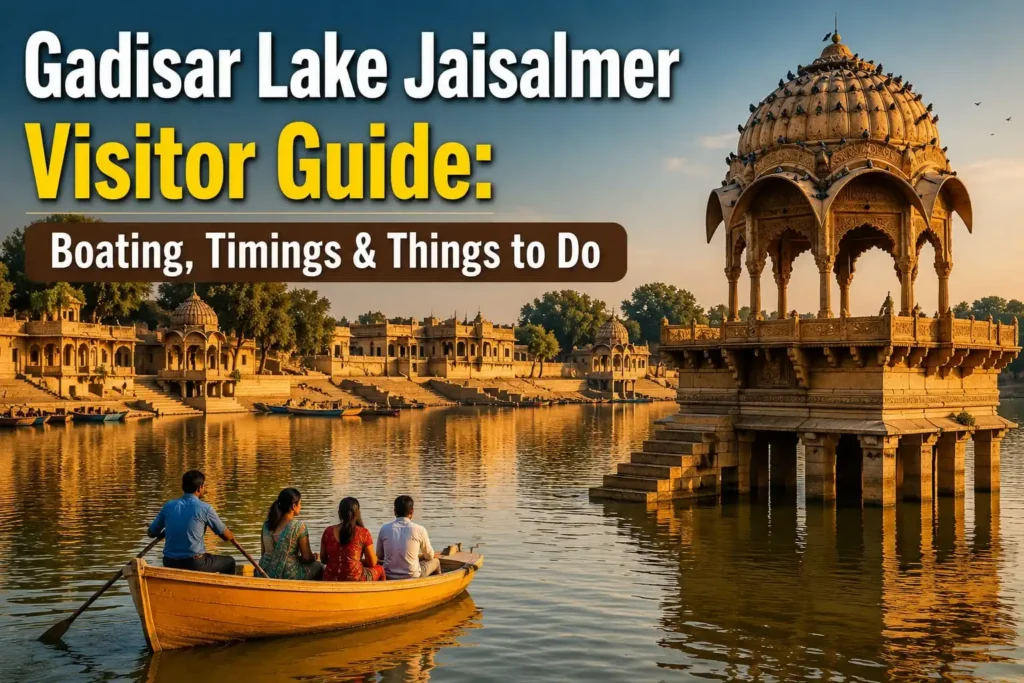
There are plenty of places in Jaisalmer where you go to see something impressive. Gadisar Lake is different. You come here to slow down for a while. The lake sits just outside the old city and brings together water, sandstone architecture, small shrines, carved gateways and wide desert skies in one peaceful setting. It was once an important part of Jaisalmer’s traditional water system, but today it is better known as a relaxing stop for visitors looking for boating, photography, sightseeing and a quieter side of the Golden City.
If you’re planning a visit, the experience is fairly easy to fit into a Jaisalmer itinerary. You don’t need an entire day here. A couple of hours is enough for a walk around the lake, some photographs and a boat ride.
Gadisar Lake: A Quick Look Before You Visit
Gadisar Lake is an artificial waterbody in Jaisalmer that played an important role in supplying water to the historic city. Sources commonly trace its original construction to Rawal Jaisal in the 12th century, with later reconstruction or expansion associated with Maharawal Gadsi Singh. What makes the lake interesting today isn’t simply the water. Its surroundings are filled with the architectural details that make Jaisalmer so recognisable and the main entrance is through Tilon Ki Pol, an ornate sandstone gateway that has become one of the most recognisable features of the area.
Things to Do at Gadisar Lake
You don’t need a long list of activities to enjoy Gadisar Lake. Most of the appeal comes from taking your time and noticing the surroundings.
1. Take a Boat Ride
Gadisar Lake Boating is the most popular activity for visitors who want to experience the lake from the water. Depending on availability, you may find different types of boats, including pedal boats, rowboats or other recreational options. Boat rides generally take you around the main lake area, giving you a different perspective of the sandstone structures along the shore.
2. Walk Around the Ghats
Don’t make the mistake of arriving, taking a boat ride and immediately leaving. The edges of Gadisar Lake are worth exploring on foot. Walk along the ghats and look at the small temples, shrines and sandstone structures surrounding the water. The atmosphere can change considerably depending on the time of day. Mornings tend to feel quieter, while evenings bring more visitors and a livelier atmosphere.
3. See Tilon Ki Pol
The carved sandstone gateway provides an excellent introduction to the architectural character of the area. It’s also one of the easiest places around the lake to stop for photographs before or after exploring the waterfront. Take a few minutes to look closely at the carving rather than treating it simply as an entrance.
4. Enjoy the Sunrise or Sunset
Early morning can be peaceful, with softer light falling across the water and sandstone structures. Later in the day, the warm sunlight gives the architecture a deeper golden appearance. Sunset is generally the busier period, but it can also be the most visually rewarding.
5. Spend Some Quiet Time by the Water
One of the best things to do at Gadisar Lake is simply sit near the water for a while. The combination of the lake, old sandstone structures and open sky creates a noticeably calmer atmosphere than the busy streets around some of Jaisalmer’s major attractions.
6. Look for Birds
The lake can also attract birds, particularly during suitable seasons. If you’re interested in photography or birdwatching, visiting in the quieter morning hours gives you more time to observe the surroundings without the larger evening crowds. Bird sightings naturally vary with season and water conditions, so don’t treat any particular species as guaranteed.
Also Read: Patwon Ki Haveli Guide
Boating Experience at Gadisar Lake Jaisalmer
Boating is one of the most popular activities at Gadisar Lake Jaisalmer. Row boats, paddle boats, and Shikara rides are typically available for visitors.
A short ride lets you see the surrounding temples, ghats, and Tilon Ki Pol from a completely different angle than standing on the bank. The experience is calm and unhurried, making it a good fit for couples, families, and small groups. Sunset boating is especially popular, since the golden light and reflections on the water make for some of the best photos at the lake.
Gadisar Lake Timings and Entry Fee
Entry to Gadisar Lake is free. There’s no formal gate restricting access to the lake area itself, which means early risers can technically visit for sunrise even before official hours begin. That said, boating and other organized services generally operate within set hours, roughly 8 AM to 7 or 8 PM, though this can vary slightly, so it’s worth confirming if boating specifically is your priority.
You Can Also Read More About: Best Time to Visit Jaisalmer
Frequently Asked Questions
1. What is Gadisar Lake famous for?
Gadisar Lake is known for its historical importance as a traditional water reservoir, its sandstone architecture, Tilon Ki Pol, boating, photography and peaceful setting near Jaisalmer’s old city.
2. What is the price of boating at Gadisar Lake?
Prices vary according to the type of boat and operator. Recent information lists pedal boats from around ₹100, but visitors should confirm the current rate before taking a ride.
3. What is the best time to visit Gadisar Lake?
October to March is generally the most comfortable season. For the best experience during the day, early morning and late afternoon are preferable to the hotter midday hours.
4. How far is Gadisar Lake from Jaisalmer Fort?
Gadisar Lake is approximately 1.5–2 km from Jaisalmer Fort, depending on the route and exact starting point.
5. How much time is needed to visit Gadisar Lake?
Around 1–2 hours is enough for most visitors to see Tilon Ki Pol, walk around the lake, take photographs and enjoy boating.
6. What can I visit near Gadisar Lake?
Gadisar Lake can easily be combined with other Jaisalmer attractions in the old city and Fort area. Its relatively close location makes it practical to include as part of a wider sightseeing itinerary.